

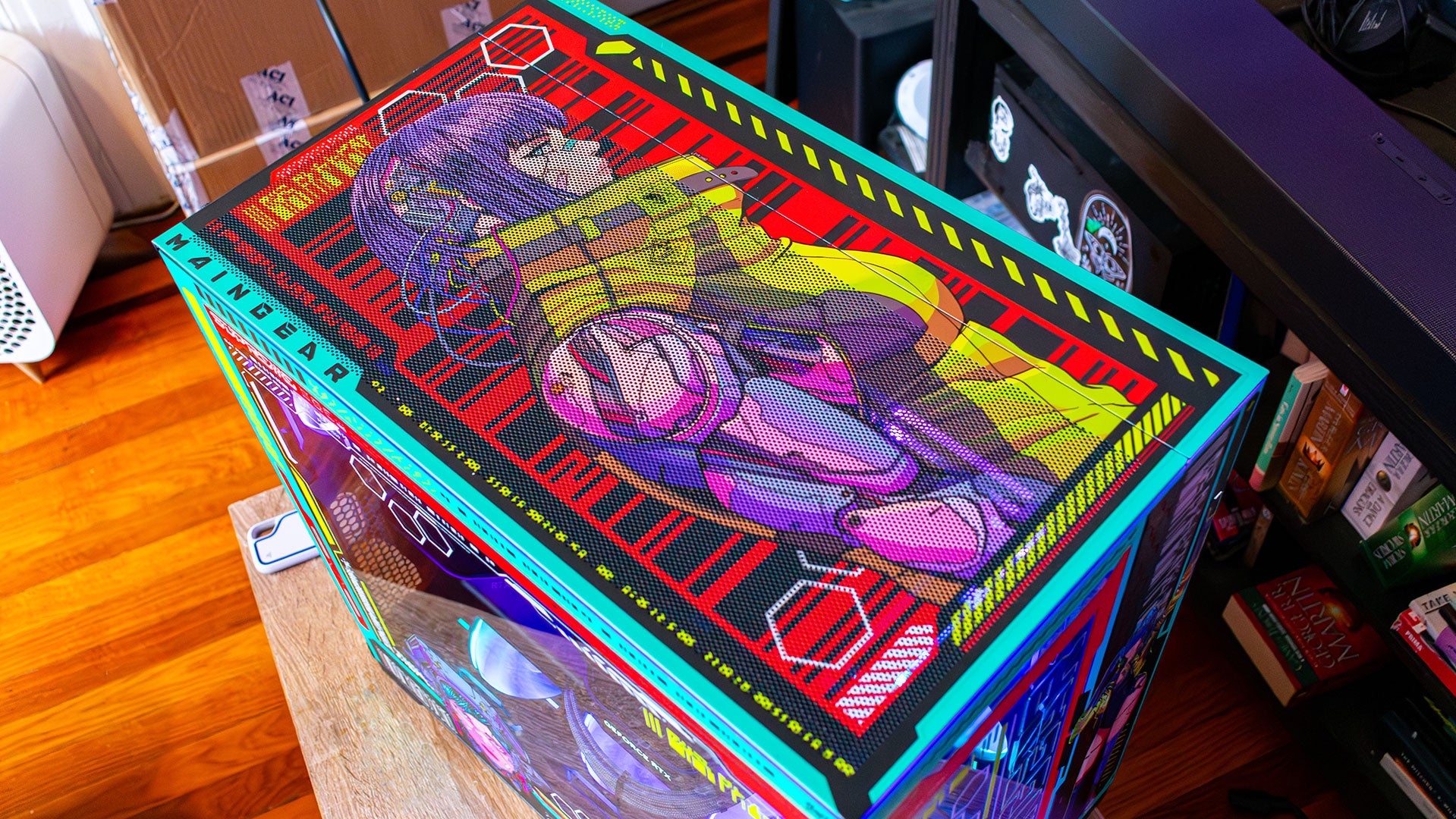
The decision to invest in a premium gaming PC like the Maingear Rush is rarely straightforward. While numerous companies, including Maingear, provide custom assembly services, the appeal of a DIY build can cast a shadow over such purchases. Upon visiting Maingear’s website to evaluate the model sent for this review, I discovered it would set potential buyers back an astounding $7,032. This figure raises questions about the value of the additional $2,000, as a comparable system could typically be assembled for around $5,000.
For seasoned builders, this expense may not equate to much more than an aesthetically pleasing machine. However, for those who are less confident in their ability to navigate and maintain the intricacies of PC hardware, the lifetime technical support offered with this system may justify the investment.
Design and Features
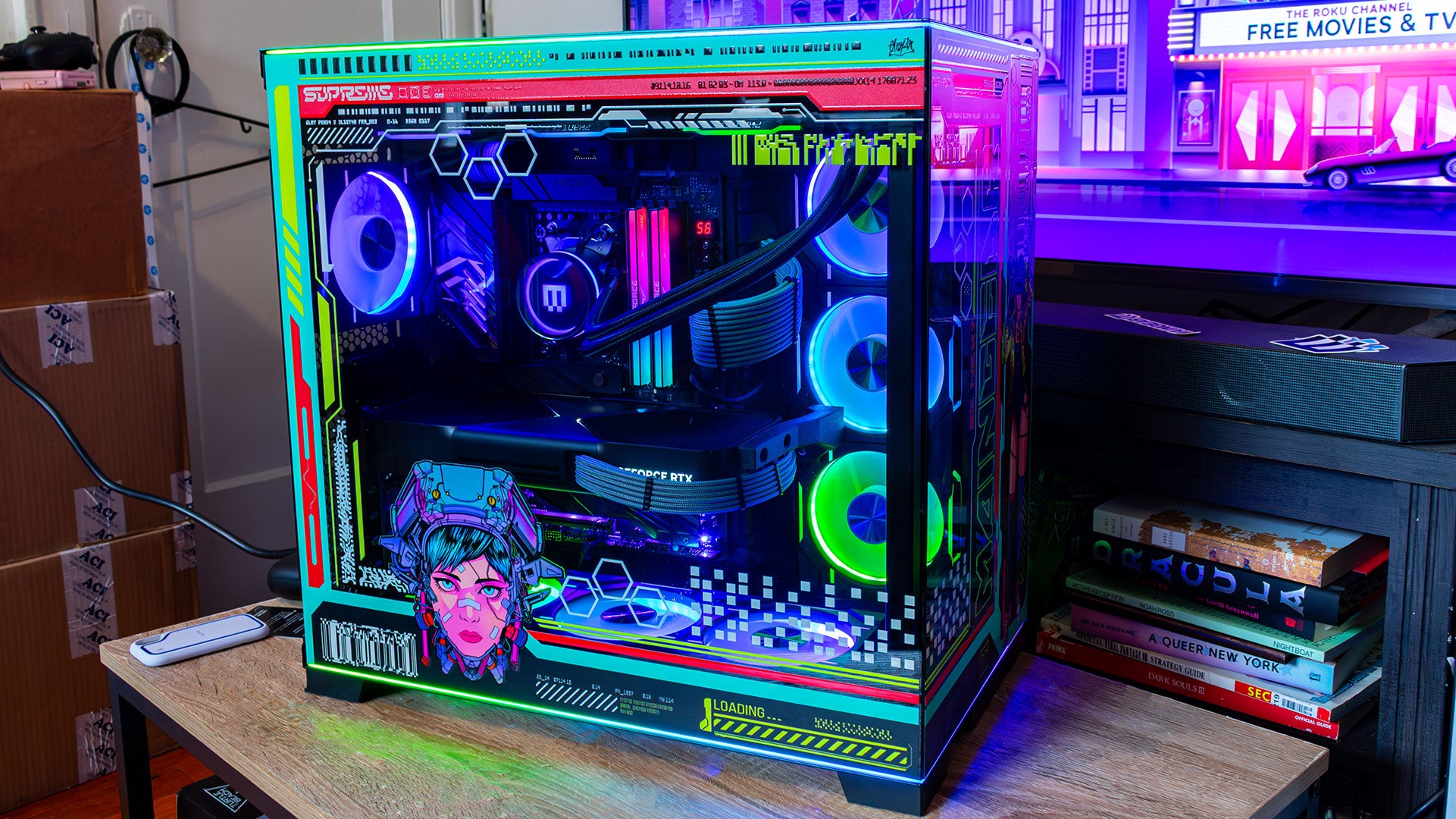
With a price point exceeding $7,000, one naturally expects a certain level of luxury, and the Maingear Rush does not disappoint. Sporting an expertly airbrushed case and impressive cable management, this gaming PC embodies a showcase-ready setup without the hassle of DIY cabling.
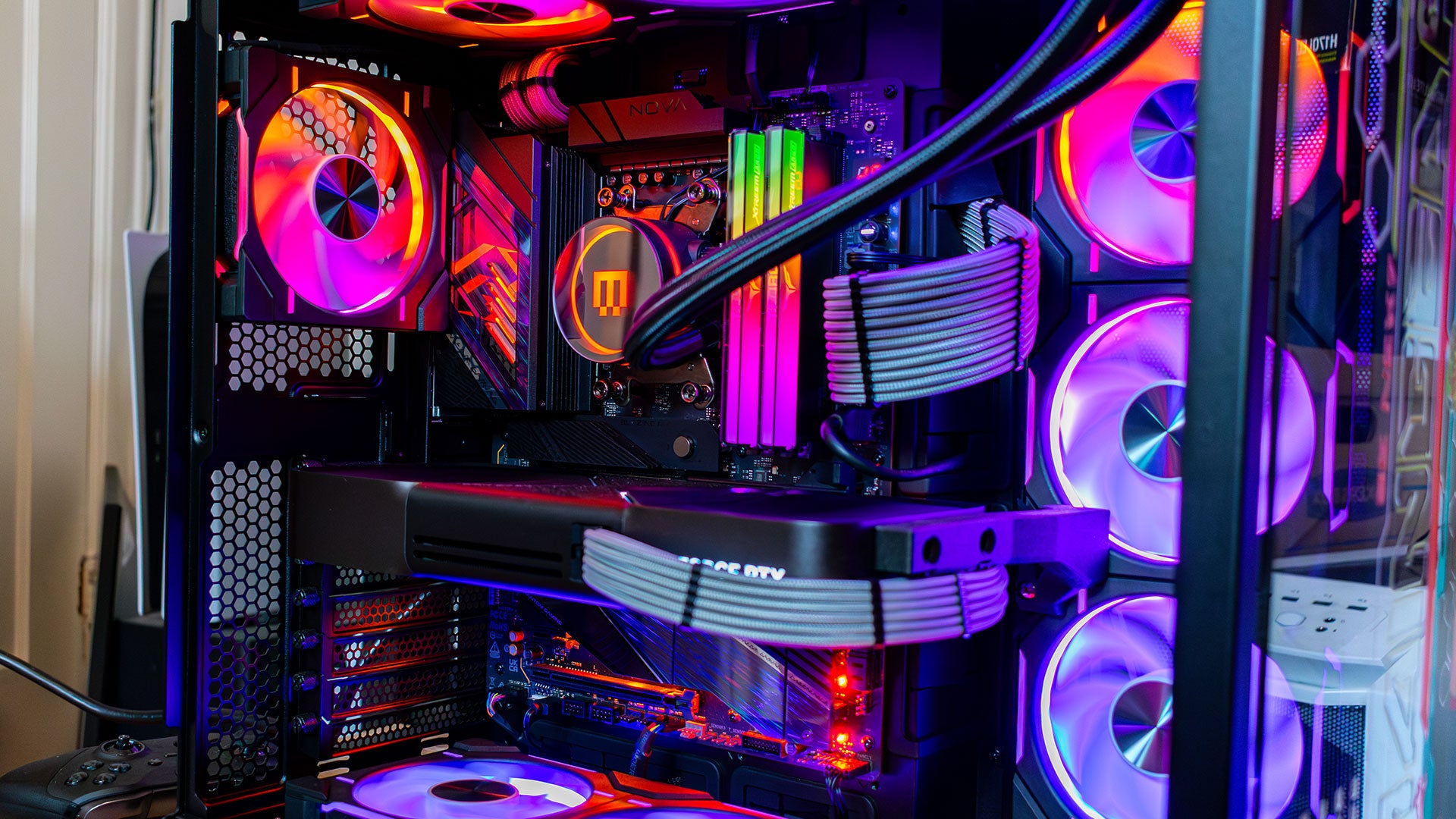
The unit reviewed features striking gray braided cable extensions for the motherboard, GPU, and CPU power connections, ensuring that visible cables seamlessly blend into the overall aesthetic. While a handful of additional cables are visible—particularly when the glass side panel is removed—they remain unobtrusive. This design philosophy stems from Maingear’s commitment to utilizing off-the-shelf components, necessitating some minimal cable visibility.
Remarkably, Maingear has developed a mounting solution that minimizes the need for foam packing during shipping—a common practice in the industry to prevent component displacement. The sturdy graphics card mounting means that even the hefty RTX 5090 Founders Edition can be shipped securely; upon unpacking, I found it undisturbed, demonstrating impressive build integrity.
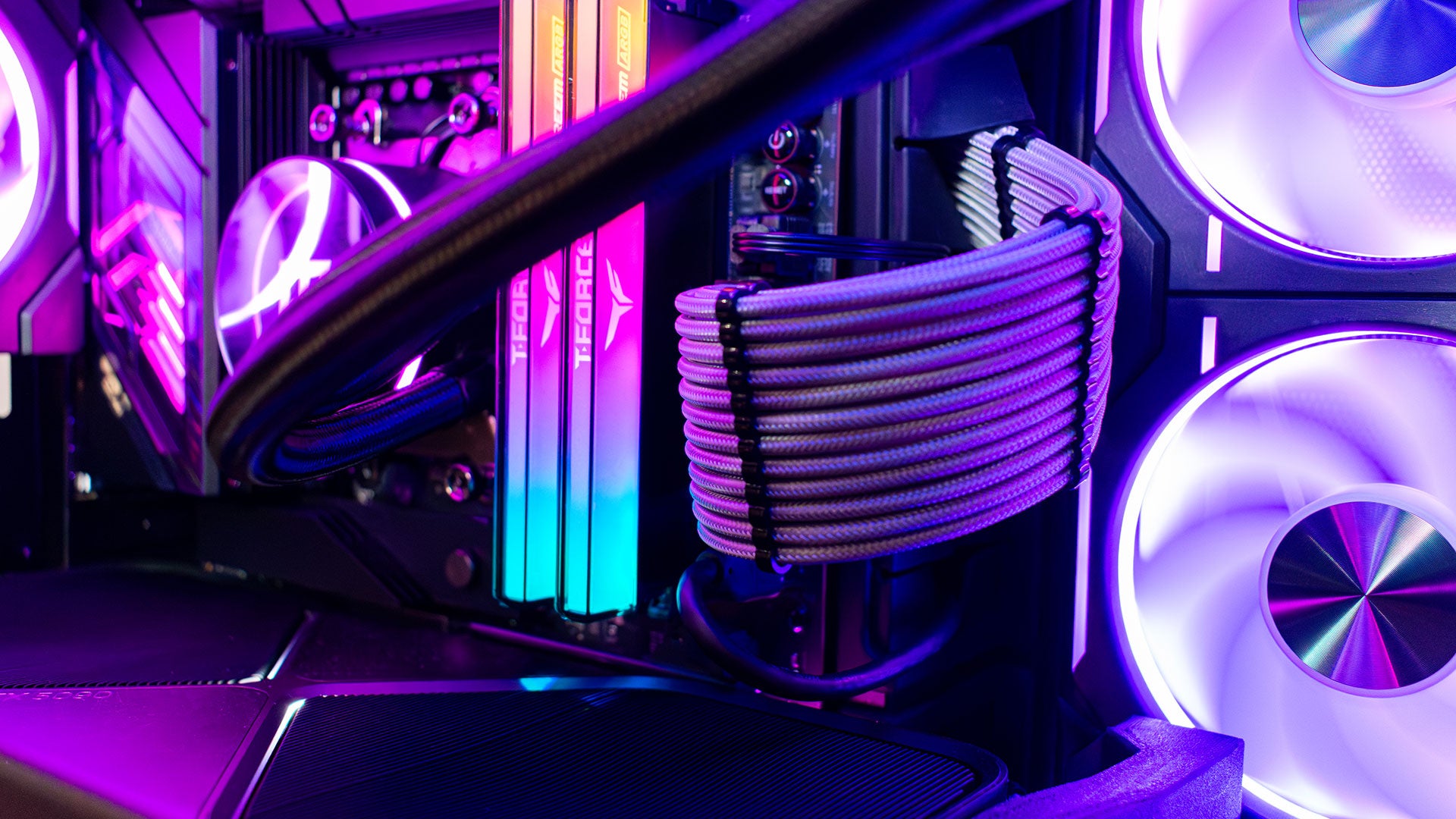
This robust mounting system helps prevent graphics card sagging, which can lead to performance degradation or complete failure over time.
While Maingear used to specialize in custom cases, the Rush appears largely inspired by the esteemed Lian Li O11 Dynamic Evo XL. Although I could not definitively confirm this, such an association is not unwelcome. The case’s modular design allows for easy access to all panels for upgrades or maintenance, including a conveniently side-mounted power supply with accessible neat cable management.
The front panel is equipped with two USB-A ports, one USB-C port, and a 3.5mm audio jack. It would be advantageous to have additional USB-A ports, as frequent dongle swapping can be cumbersome. However, with the inclusion of the ASRock Phantom Gaming X870E Nova Wifi, plenty of backup USB ports are available at the rear of the casing.
At the top left of the front panel is the solitary power button, accompanied by three additional buttons labeled M, C, and B. After a month of use, I must admit I remain uncertain of their functions as pressing them yields no observable response. In addition, conveniently located above these buttons is a reset button. While it is useful to have a reset option on the front panel, I could see situations where one might inadvertently reboot the system while trying to access one of the other controls. While not catastrophic, it could lead to frustration during critical moments.
Why Spend So Much?
Much like the Origin Millennium I previously reviewed, the Maingear Rush falls into the category of exceptionally pricey gaming PCs. The base model begins at $2,026, which provides a rather unimpressive setup featuring a Ryzen 5 9600X, RTX 5050, and 16GB of RAM alongside a 1TB SSD. While I recognize that graphics card prices have been inflating, that initial price remains dubious. Contrarily, the high-end configurations venture into luxury territory, offering a premium experience.
The version provided for review, priced at $7,032, integrates an AMD Ryzen 9 9950X3D, RTX 5090 Founders Edition, 48GB of RAM, and a 2TB SSD. Based on my calculations on PCPartPicker, this setting could be sourced for approximately $4,800. Thus, the premium for Maingear’s assembly approaches $2,300.
This added cost might seem steep, particularly considering the exceptional visuals of the system. However, the critical aspect worthy of attention is the customer support. While my review period has ended, and I must return the unit before any potential service needs arise, Maingear promotes robust lifetime tech support, covering labor for any future repairs alongside a one-year warranty.
Determining the value of this additional investment boils down to individual needs. As an enthusiast with a passion for hardware repairs and upgrades, I find it challenging to justify an extra $2,300 simply for assembly and potential technical support. Yet, many users who desire a high-end gaming PC without the commitment of assembly or servicing may find this proposition appealing, particularly if the promise of lifetime support is upheld. Regardless, the Maingear Rush should be viewed as a luxury investment. While similar hardware may be available cheaper through other avenues, the intricate support that comes with this purchase is a significant distinction—especially for those hesitant to build their own systems.
Performance
Equipped with an RTX 5090 and a Ryzen 9 9950X3D, the Maingear Rush demonstrates formidable capabilities. Supported by a 1650W power supply, there is ample room for overclocking enthusiasts to push the system further.
However, in our benchmarking, the performance of the RTX 5090 in this setup fell short of expectations compared to my own test rig, especially in 3DMark assessments. In the Speed Way test, for instance, the Maingear Rush registered a score of 13,563, which is approximately 6% lower than the same GPU in my other setup. Similarly, in Cyberpunk 2077, the Maingear system achieved 121 fps while my benchmark yielded 131 fps under identical settings.
Variances in performance between identical graphics cards are not uncommon, and are often attributed to the so-called ‘silicon lottery’ rather than assembly quality. However, a proactive overclocking strategy by Maingear could have yielded slightly better performance metrics.
Nevertheless, despite the performance discrepancies, the Maingear Rush remains entirely capable of handling contemporary gaming demands. After utilizing this system as my primary PC for about a month, I did not perceive any significant performance gaps unless I investigated comparative data.
Based on reporting by Jacqueline Thomas. Read the full story at https://www.ign.com/articles/maingear-rush-artist-series-review