

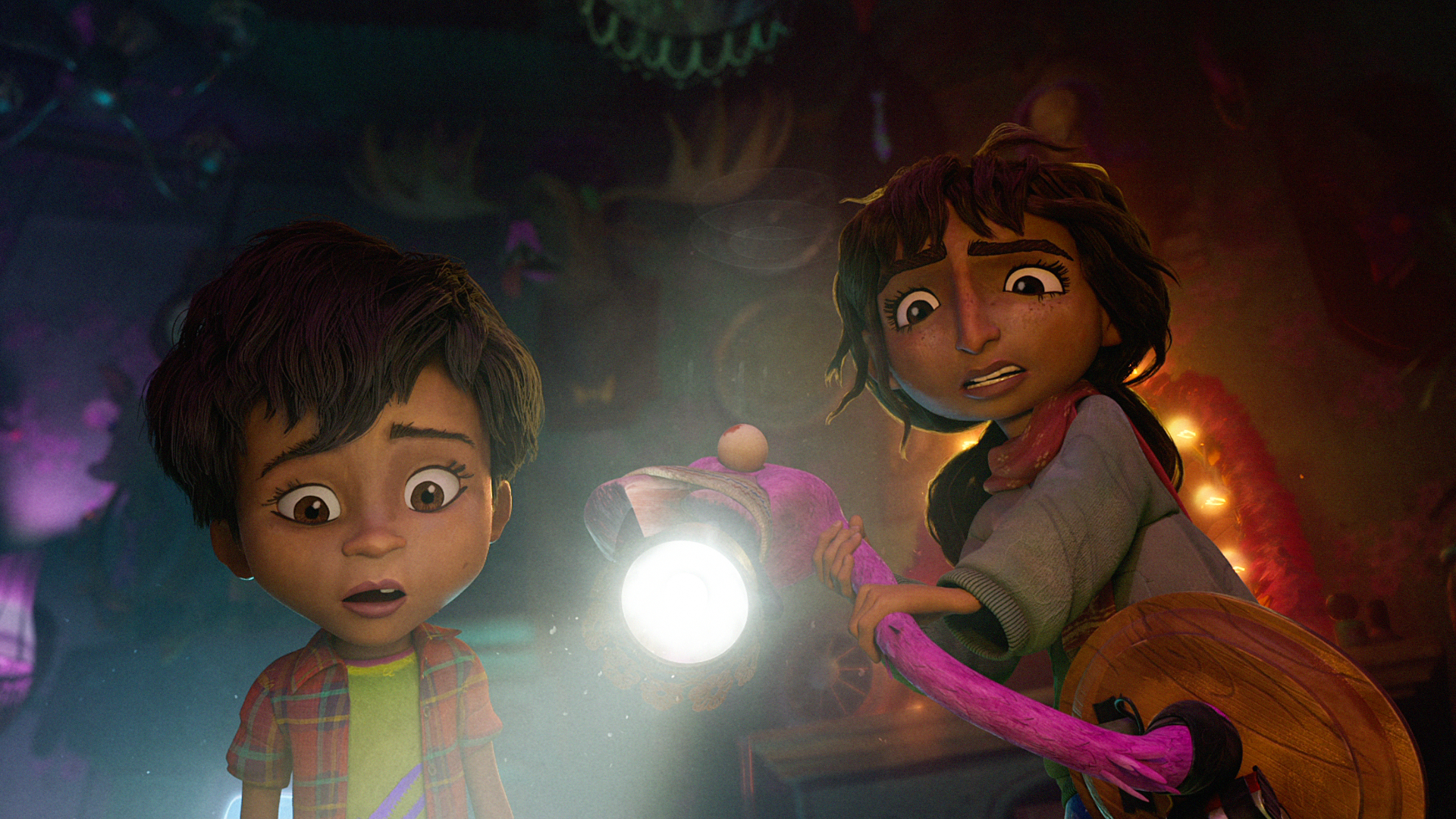
While many young Roald Dahl enthusiasts favor the unique creepiness of The Witches or the eccentric charm of James and the Giant Peach, others gravitated toward The Twits. This notorious 1980 novel, written amidst Dahl’s disdain for beards, is celebrated for its gross-out humor, featuring absurdities such as glass eyes at the bottom of beer glasses. The story revolves around a disheveled couple, the Twits, and their entrapment of clever monkeys, an unsettling premise not easily deemed a classic like Charlie and the Chocolate Factory.
The Twits has previously traversed the stage, but a film adaptation has been much anticipated. After a live-action version was abandoned, a television series concept transformed into an animated feature, helmed by director Phil Johnston, known for beloved films like Wreck-It Ralph and Zootopia. This adaptation offers Johnston the opportunity to explore elements of chaos and absurdity within a traditionally wholesome framework.
The Twits
The film opens with the Twits emerging as comically malevolent figures. Set in contemporary times, new characters enrich the narrative, yet the core grotesqueness of Dahl’s tale remains. Voiced vividly by Margo Martindale and British comedian Johnny Vegas, the duo engages in cruel antics, while plotting the opening of an amusement park with dubious sanitation standards. Though more crass than whimsical, this rendition aims to captivate a younger audience who appreciates edgier content.
Despite spirited voice performances and moments of oddball humor, the production does not elevate above standard expectations. Original songs by David Byrne lack a lasting impact, and the overall aesthetic falls short compared to the polished visuals of Disney or DreamWorks. The film’s intended grittiness sometimes veers into the territory of lackluster animation, reminiscent of cheaper productions that age poorly.
The introduction of characters like Beesha (Maitreyi Ramakrishnan) and Bubsy (Ryan Lopez) adds a formulaic feel, indicating a perception that Dahl’s work might be insufficiently relatable by modern standards. This trend has been echoed across several recent adaptations, where the quirks and idiosyncrasies of Dahl’s worlds are tempered to fit contemporary tastes.
However, as the story progresses, elements emerge that resonate profoundly. Beesha and Bubsy confront the Twits, as children often do in film. Surprisingly, the denizens of their city—Triperot—embrace the Twits, misled by promises of revitalization stemming from foul business practices. The children’s dismay leads them to seek a way to liberate their community from this deceptive allure.
In 2025 America, this narrative presents stark parallels to the socio-political climate, marking The Twits as the first animated feature to confront the pervasive influence of Trumpism. It deftly articulates the unsettling reality of witnessing morally reprehensible figures gaining power while peddling false nostalgic narratives.
Emerging themes of belonging, family, and empathy are woven into the narrative but are overshadowed by the sharp political undertones that make The Twits stand out—a surprising turn in a children’s film.
Notably, despite its initial modest appearance, the film evolves to showcase its creative strengths. Alan Tudyk’s memorable portrayal of Sweet Toed Toad, alongside the charming Muggle-Wump monkeys, voiced by Natalie Portman and Timothy Simons, adds depth. Even whimsical elements, like the animated hairballs that sprout from stress, while undoubtedly aimed at merchandising, manage to endear the viewer.
It is intriguing how a film initially perceived as a trivial execution can ultimately rise to distinguish itself significantly, rendering previously noted flaws either negligible or even admirable. Detractors may dismiss this perspective as typical bias, to which one might retort: perhaps it’s time to reassess societal norms.
Based on reporting by Hollywood Reporter. Read the full story at Hollywood Reporter.