
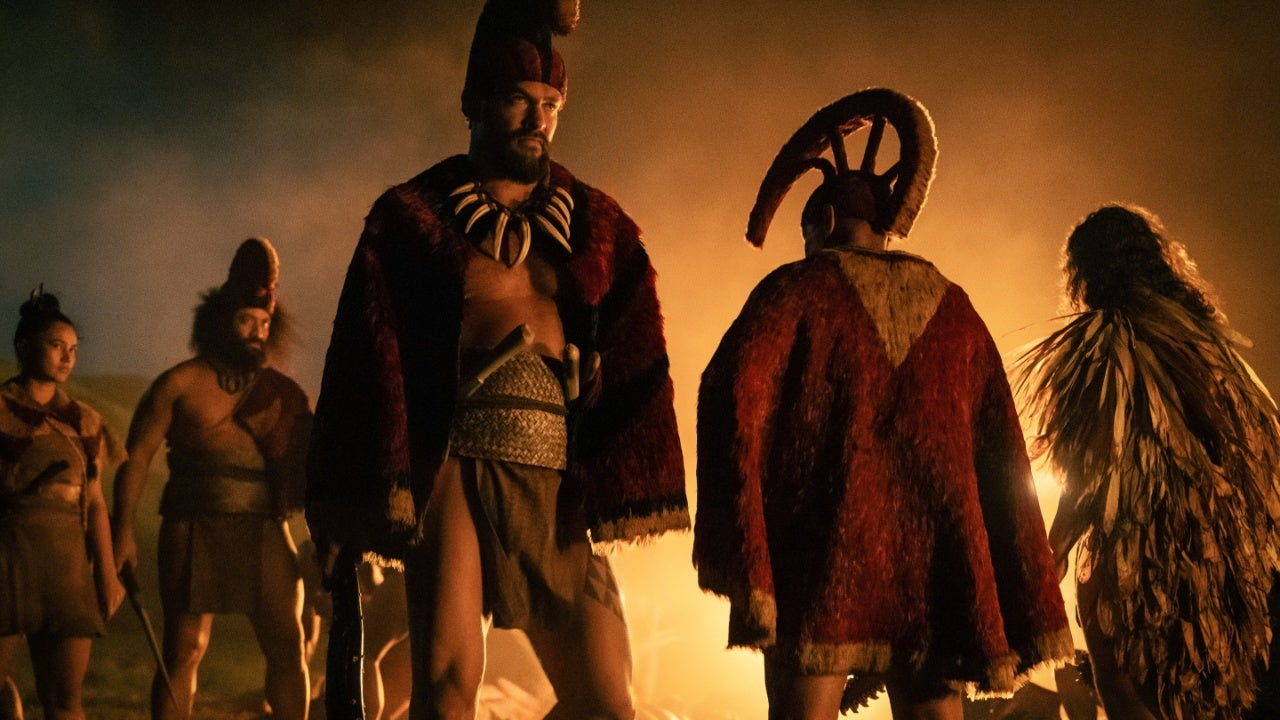
The first two episodes of Chief of War are now streaming on Apple TV+. New episodes debut on Fridays through September 19.
Chief of War, the new Apple TV+ series featuring Jason Momoa as both lead star and co-creator, carries a significant burden: that of historical representation. Set during the unification of the Hawaiian kingdoms in the 18th century, the show aims not just to entertain, but to recount an often overlooked chapter of history. Ahead of its premiere, Momoa has emphasized the comprehensive research undertaken by the creative team, claiming that the narrative is “bigger than Game of Thrones could ever be.” Each battle, tradition, and interpersonal connection imbues the show with a sense of gravity, though this self-seriousness can occasionally overshadow its storytelling.
The series is crafted with ambition; Season 1 lays the groundwork for Hawaiian unification by quickly introducing a broad array of characters, including chiefs, warriors, advisors, and other influential figures, each confronting the brutal realities that colonialism brings to their shores. Importantly, Chief of War refrains from portraying Native Hawaiians as a uniform entity, steering clear of the simplistic “noble savage” trope, allowing for a more nuanced exploration of individual motivations and responses to threats.
Every character in Chief of War has distinct opinions on the needs of their communities and strategies to safeguard their islands from encroaching settlers. This includes Kamehameha (Kaina Makua), a future ruler, and Ka'ahumanu (Luciane Buchanan), a young woman facing an unwanted marriage. The historical events that influence these narratives provide fertile ground for potential future seasons, while the show’s intense combat scenes maintain high stakes akin to modern epics.
However, Chief of War struggles with pacing and coherence, attempting to devote equal attention to multiple story arcs, resulting in several unresolved plot threads. Central to the series is **Ka'iana** (Momoa), a warrior chief from Maui caught amidst the turmoil of unification despite his desire for peace. Historically, Ka'iana is renowned for being the first Hawaiian prince to travel abroad—a storyline the series touches upon but fails to develop fully, relegating his motivations to mere exposition rather than deep exploration. Consequently, despite commendable performances from Momoa, Ka'iana’s character development feels predominantly told rather than shown.
A production of this nature benefits from creative liberties; however, it should engage with its historical subject matter dynamically, whether through faithful adherence or inventive reinterpretation. Yet the storytelling in Chief of War often flits between themes without settling into a cohesive narrative. This propensity leads to thinly drawn love interests and cliched antagonists, ultimately giving way to repetitive storytelling.
While watching Chief of War, many viewers may draw parallels to FX’s Shōgun, as both series delve into the complexities of colonialism and its impact on nuanced cultural practices. However, *Shōgun* adeptly centers cultural clashes as the core of its narrative, whereas *Chief of War* exhibits an acute awareness of its role as a cultural translator, often relegating intricate aspects of Hawaiian culture—such as sexuality, social hierarchy, and spirituality—to simplistic, predictable arcs. In this regard, it bears more resemblance to **The Gilded Age**—albeit with significantly more violence—where personal conflicts inadequately symbolize broader historical upheavals.
Nevertheless, *Chief of War* aspires to transcend the limitations of its own narrative. The series is rich in detail, evoking an authentic representation of its historical context; every aspect of costuming appears meticulously crafted, and the vessels seem convincingly constructed from authentic materials. In a landscape where production design often skews towards the superficial, *Chief of War* excels by integrating traditional techniques under the guidance of qualified experts across various departments, rendering the narrative’s violent conflicts and grandiose ambitions palpably real.
This commitment to authenticity makes it all the more disappointing that the narrative fails to reach its potential. There exists a depth to the characters’ conflicts that often feels restrained. Ka'iana’s internal struggles with the nature of war are frequently overshadowed by more superficial plot lines. Veteran actor Temuera Morrison portrays the complex Maui Chief Kahekili II, yet the series underutilizes this multifaceted role, reducing him to a caricature of villainy—a missed opportunity for a performance of greater substance amidst rich historical material.
As the first season concludes with an impressive flourish, hinting at the future of Hawaiian history, it leaves ample room for subsequent seasons. Despite its shortcomings, *Chief of War* remains an intriguing examination of a significant historical era. As the creative team broadens its perspective beyond binary narratives, they will be well-equipped to cultivate something truly remarkable. Once its characters are rendered with the complexity they deserve, the potential for developing a compelling legacy will come into sharper focus.
Based on reporting by Erik Adams. Read the full story at https://www.ign.com/articles/chief-of-war-review-jason-momoa-apple-tv-plus