

The newly established DC Universe is swiftly taking shape, both on television and film, with 2025’s Superman generating significant buzz amongst fans. Consequently, it comes as no surprise that Wonder Woman is being fast-tracked for a fresh iteration that distinguishes itself from her DC Extended Universe version. Recent artwork from the DC Universe hints at a pivotal distinction between these two representations of the iconic heroine.
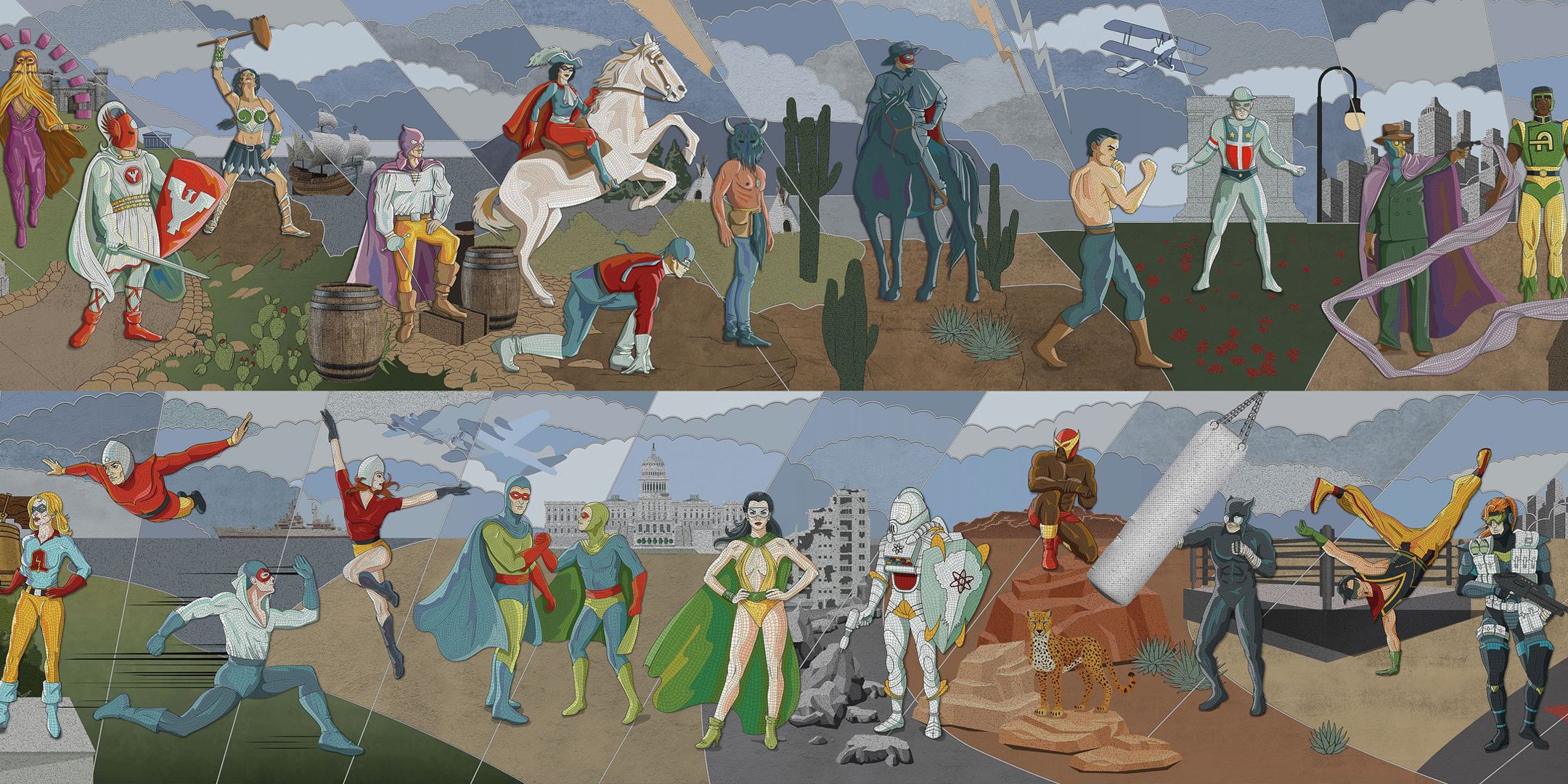
As highlighted in a mural shared by DC Studios head James Gunn, Wonder Woman is conspicuously absent from the Hall of Justice mural depicting metahumans throughout history. This absence implies that her introduction occurs in contemporary times rather than in the distant past. This conceptualization diverges significantly from her previous cinematic portrayals and aligns with recent retroactive changes made in the comic book narrative.
The current metahuman contingent within the DC Universe appears to be the Justice Gang, essentially a precursor to the Justice League, financially supported by Maxwell Lord—who is glimpsed briefly in a newscast towards the end of Superman. As of now, the connection, if any, between this contemporary group and earlier heroes remains unclear.
Intriguingly, the mural within the Hall of Justice reinforces a sense of legacy, showcasing a plethora of both recognizable and lesser-known DC characters with historical ties extending over several centuries. Following the film’s release, Gunn unveiled the complete mural, presenting a rich tapestry of metahuman figures whose legacy spans at least 300 years.
Characters featured in the mural seem to represent various eras, suggesting a fascinating reinterpretation of their histories. For instance, Wildcat appears positioned in the 1970s and 1980s rather than his traditional World War II backdrop. Similarly, Vibe, with his breakdancing flair, immerses himself style-wise within the 1980s period, while the Golden Age Sandman is depicted as operative in the 1930s. Notably, Exoristos, introduced during the New 52 reboot in Demon Knights, emerges as one of the first Amazons to interact with the human world, though she seems to stand apart from Wonder Woman’s legacy.
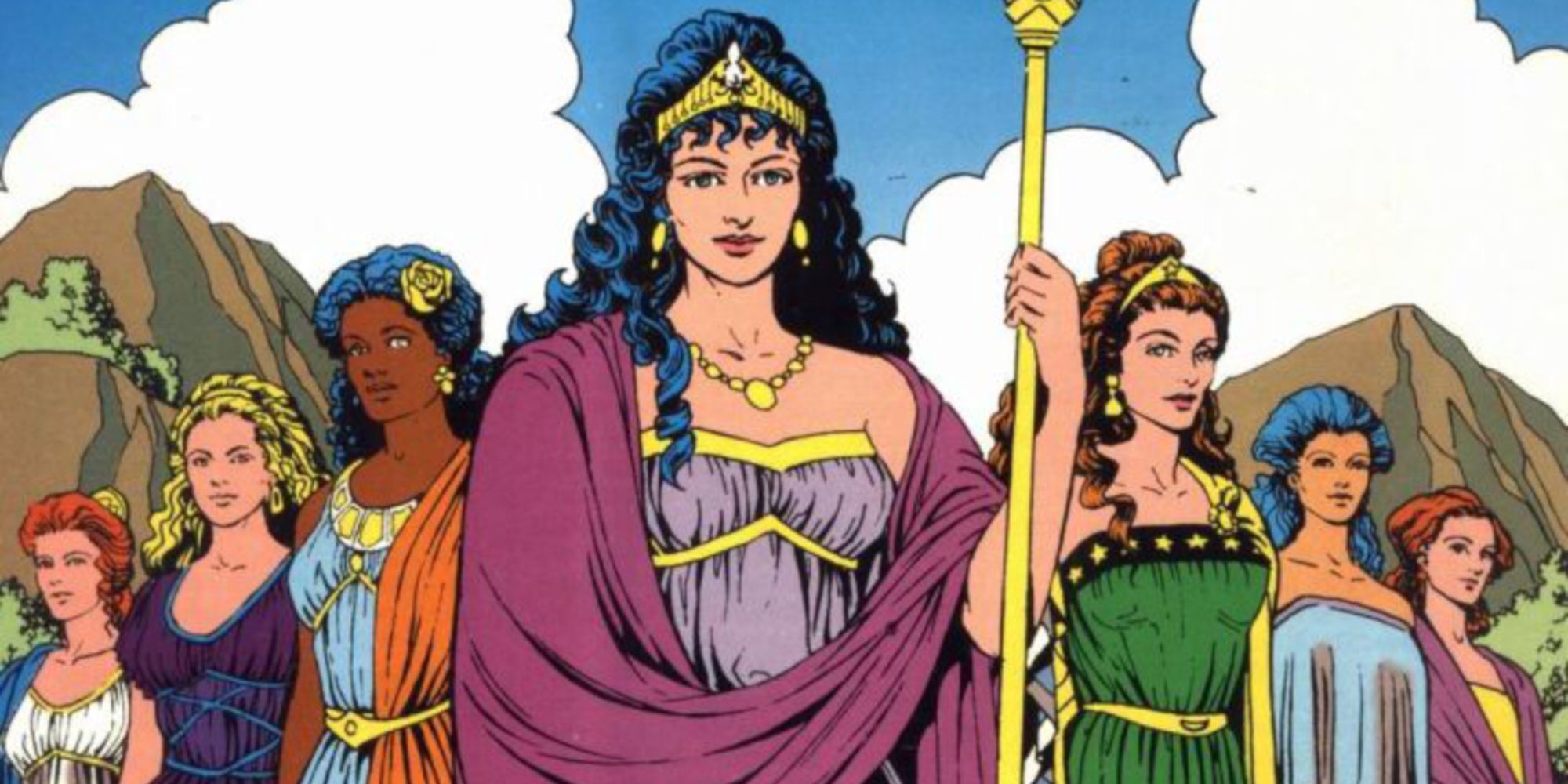
The retelling of Wonder Woman’s origins post-Crisis on Infinite Earths has posed several narrative challenges for DC Comics. The reconfiguration necessitated the consolidation of disparate histories, meaning that characters established in present-day contexts could no longer be linked to their Golden Age or World War II origins. While this direction succeeded for DC’s Trinity—Superman, Batman, and Wonder Woman received modern reboots—it resulted in complications stemming from John Byrne’s controversial retcon that introduced a convoluted timeline transition for Wonder Woman. This narrative rework further cast Queen Hippolyta as having operated alongside the Justice Society of America, presenting a perplexing construction of Wonder Woman’s Golden Age exploits.
This layered and intricate narrative has led to the interpretation of Wonder Woman as a character bound to a legacy, one that many fans find problematic.
Based on reporting by CBR. Read the full story at CBR.