

This review contains spoilers for Star Trek: The Last Starship #1, available now from IDW Publishing.
The evolution of pop culture into an expansive franchise is a fascinating journey, particularly in the case of the Star Trek universe. With each new television series, comic, and novel, the narrative tapestry deepens, providing fresh avenues for storytelling. Star Trek: The Last Starship, in particular, stands out by being deeply rooted in Star Trek lore while simultaneously charting its unique course, reminiscent of the groundbreaking approach taken by Star Trek: The Next Generation upon its debut.
While the return of James T. Kirk has garnered significant attention, the surprising truth about Star Trek: The Last Starship #1 is that this iconic event is merely one thread in a much larger narrative fabric.
Written by the talented team of Jackson Lanzing and Collin Kelly, with artistry from Adrián Bonilla and coloring by Heather Moore, the first issue of Star Trek: The Last Starship introduces readers to a reimagined Star Trek landscape, characterized by a sense of novelty that hasn’t been present in recent contributions to the franchise. Set hundreds of years after the events of Star Trek: The Next Generation, the Federation is in a golden age, marked by vibrant interspecies connections that echo the pioneering legacy of Spock.
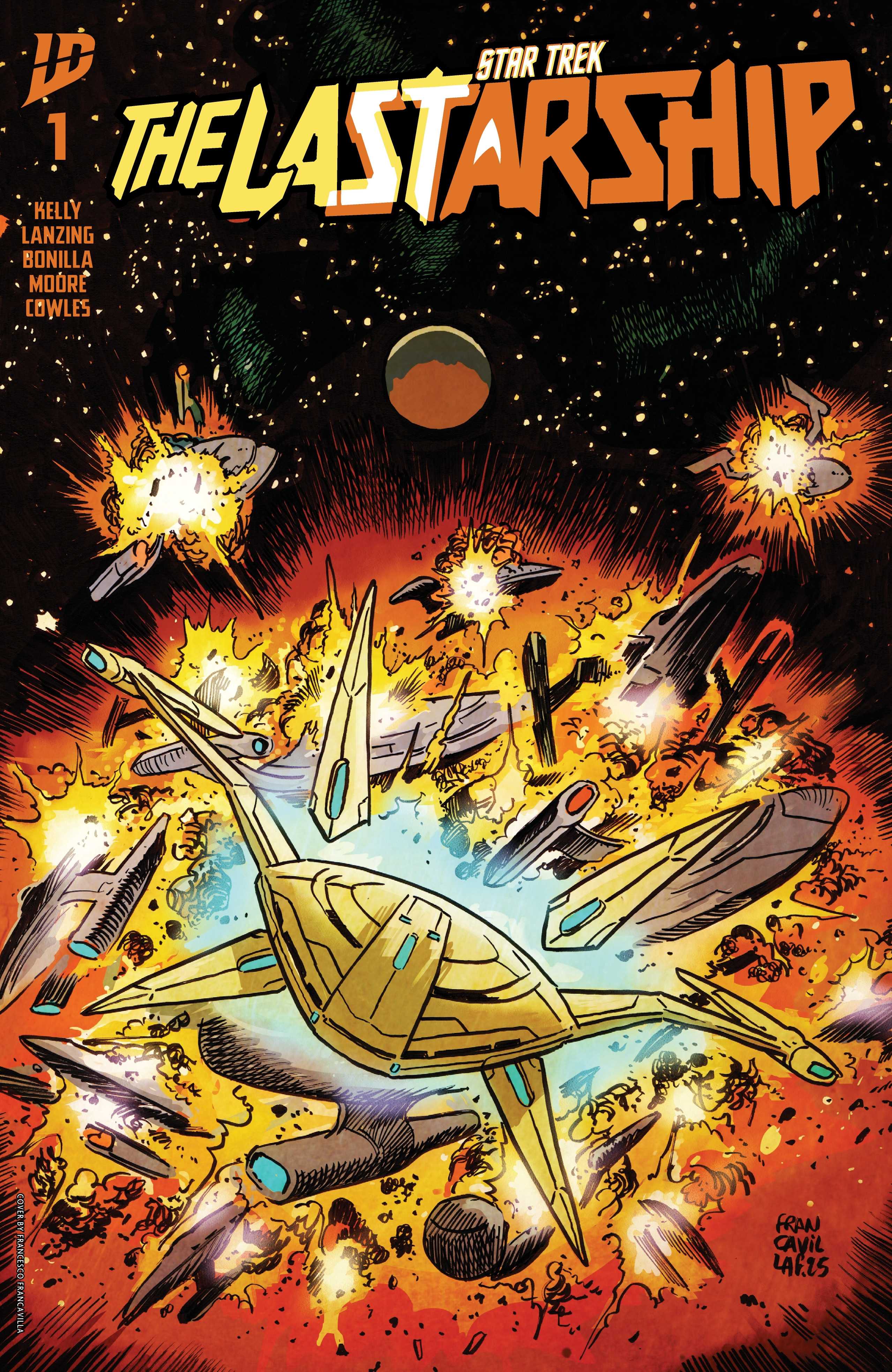
Captain Delacourt Sato, whose heritage is a blend of Trill, Vulcan, and Andorian, leads a diplomatic mission to negotiate with the Gorn, the last remaining adversarial species. The mission is surprisingly successful until a catastrophic event occurs: dilithium crystals across the galaxy become inert, resulting in the explosive destruction of nearly all Federation starships reliant on warp technology. This unprecedented event effectively cripples Starfleet, leaving Sato and a few surviving captains to navigate a perilous new reality.
In a world without warp speed, communication and travel between planets now resemble current space travel’s limitations, requiring an agonizing duration to traverse distances that were once seamless. In response to the dire situation, Sato devises a plan to broker a deal with the Borg for access to their transwarp technology. Surprisingly, the Borg Queen is none other than Agnes Jurati from Star Trek: Picard, who agrees to assist Sato under specific conditions.
This blend of nostalgia for savvy Star Trek fans, coupled with the blank canvas of the far future, allows Lanzing and Kelly to introduce bold new concepts and character dynamics. The artistic contributions of Bonilla and Moore lend a noir-inspired atmosphere, enriching the story with subtle undertones that accentuate the Federation’s decline.
At the climax of this issue, James T. Kirk makes his unexpected return, revived through Jurati’s advanced Borg technology, just as the very ideals he championed are crumbling. This decision raises intriguing questions about Jurati’s motives and sets the stage for significant developments ahead.
As the issue concludes, upheaval unfolds within the Klingon Empire, which now seeks to confront the Federation amid the widespread devastation of their ranks. The revival of Kirk alongside a resurgent Klingon threat recasts these iconic elements in an entirely different narrative framework.
With its engaging storyline and multifaceted character arcs, Star Trek: The Last Starship #1 promises to be a captivating addition to the franchise. The debut issue is a compelling read that invites speculation about the adventures to come.
Based on reporting by CBR.com. Read the full story at CBR.