

To the general public, the concept of time travel often evokes a sense of wonder, presenting opportunities to observe pivotal historical events firsthand or to alter a timeline in ways that could improve lives. Yet, these possibilities are fraught with peril, particularly the idea that such powerful technology could easily be misused. This intense subject matter serves as the backbone for numerous science fiction films, yet few articulate this theme with the uniqueness of Jean-Claude Van Damme’s classic, *Timecop*.
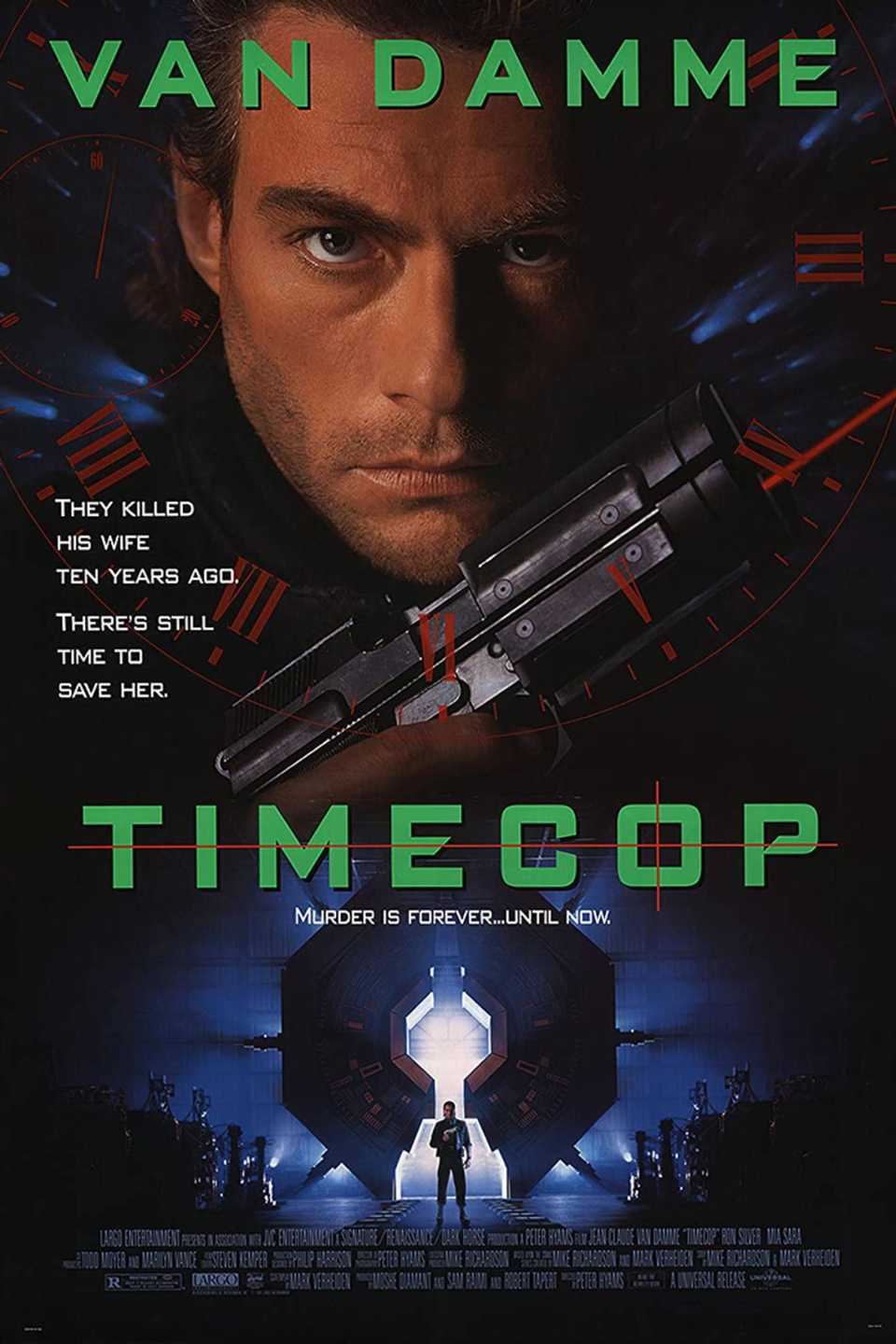
Many may not realize that *Timecop*—the 1994 dystopian thriller directed by Peter Hyams and co-produced by Sam Raimi and Robert Tapert—originated as a comic book adaptation. Drawing from a limited three-part series published by Dark Horse Comics in 1992, crafted by Mike Richardson, illustrated by Ron Randall, and scripted by Mark Verheiden, who also penned the film’s screenplay, the movie evokes a rich backdrop. Interestingly, while *Timecop* has spawned a franchise, its subsequent entries lack the star power of Van Damme, resulting in diminished public awareness.
Should time travel ever become a reality, experiencing *Timecop* for the first time again might indeed be one of its most appealing perks. While the film is often compared unfavorably to other significant time travel narratives such as the classic *Back to the Future*, the intricacies of *Primer*, and the venerable *Terminator* saga, *Timecop* set itself apart by transforming what was historically a tool for wish-fulfillment into a compelling cautionary tale with immediate stakes.
The narrative unfolds in 1994, where the advent of time travel brings with it unintended consequences, as unscrupulous individuals exploit the technology, triggering societal upheaval. In response, the U.S. Department of Justice establishes the Time Enforcement Commission (TEC) to regulate the use of time travel and mitigate its potentially disastrous impacts.
Ten years later, we meet the skilled TEC agent Max Walker (Jean-Claude Van Damme), who stumbles upon a conspiracy linked to the powerful Senator Aaron McComb (Ron Silver). The senator’s attempts to alter his past to bolster his presidential campaign lead Walker not only to unraveling McComb’s machinations but also to confronting buried truths from his own tragic past.
Despite a modest critical reception, holding a 42% aggregate on Rotten Tomatoes, and even lower audience scores, *Timecop* is widely regarded as one of Van Damme’s most memorable films, ranking as high as Number 8 in various evaluations of his cinematic works. Fans often credit the film’s success to Van Damme’s performance.
In leading *Timecop* as Agent Max Walker, Van Damme showcases not only his iconic martial arts prowess but also delivers a nuanced portrayal of a man grappling with grief, as he seeks to confront the past where he lost his wife, Melissa, played by Mia Sara of *Ferris Bueller’s Day Off* fame. His ability to anchor this fantastical narrative in reality provides a gripping experience that resonates with audiences, leading to an engaging sci-fi adventure that stands out from its contemporaries.
While *Timecop* is buoyed by its thrilling narrative and impressive action sequences, it is not without its absurdities—many of which contribute to its enduring cult status among action film aficionados. Van Damme’s signature leg splits, which become almost comedic amidst sophisticated fight choreography, encapsulate the film’s balance of thrilling action and delightful camp. The production’s vision of the future—2004—drawn from a 1994 perspective, often reflects a nostalgic camp akin to early *Star Trek* episodes.
The film’s campiness extends to one of its central plot devices: the transportation mechanism used by Walker and his colleagues in the TEC. As Walker travels back in time, he straps into a complex shuttle system that activates a portal to his chosen timeline. However, the discrepancies regarding the shuttle’s whereabouts during these transitions remain a mystery, prompting both amusement and questions regarding the film’s internal logic.
Despite its peculiarities, *Timecop* succeeded at the box office, grossing over $100 million globally—making it one of Van Damme’s most financially successful projects. Yet, the absence of a more expansive exploration of Max Walker’s escapades remains an intriguing oversight, especially given the film’s popularity. While Van Damme did not reprise his role in subsequent projects, *Timecop* did see the release of *Timecop: The Berlin Decision* in 2003, featuring Jason Scott Lee as a different TEC agent, and a television series airing from 1997 to 1998 that starred Ted King.
In 2012, following the acclaim of Rian Johnson’s *Looper*, there were discussions of a potential reboot for *Timecop* at Universal Pictures, but these plans have yet to materialize. Instead of a reimagining, a sequel featuring Van Damme reprising his role would resonate more with fans eager for a return to the TEC, coupled with answers regarding the shuttle’s perplexing role.
Based on reporting by CBR.com. Read the full story at CBR.com.